
Application
CNC Pipe Cutting for Handrail & Ornamental Fabrication
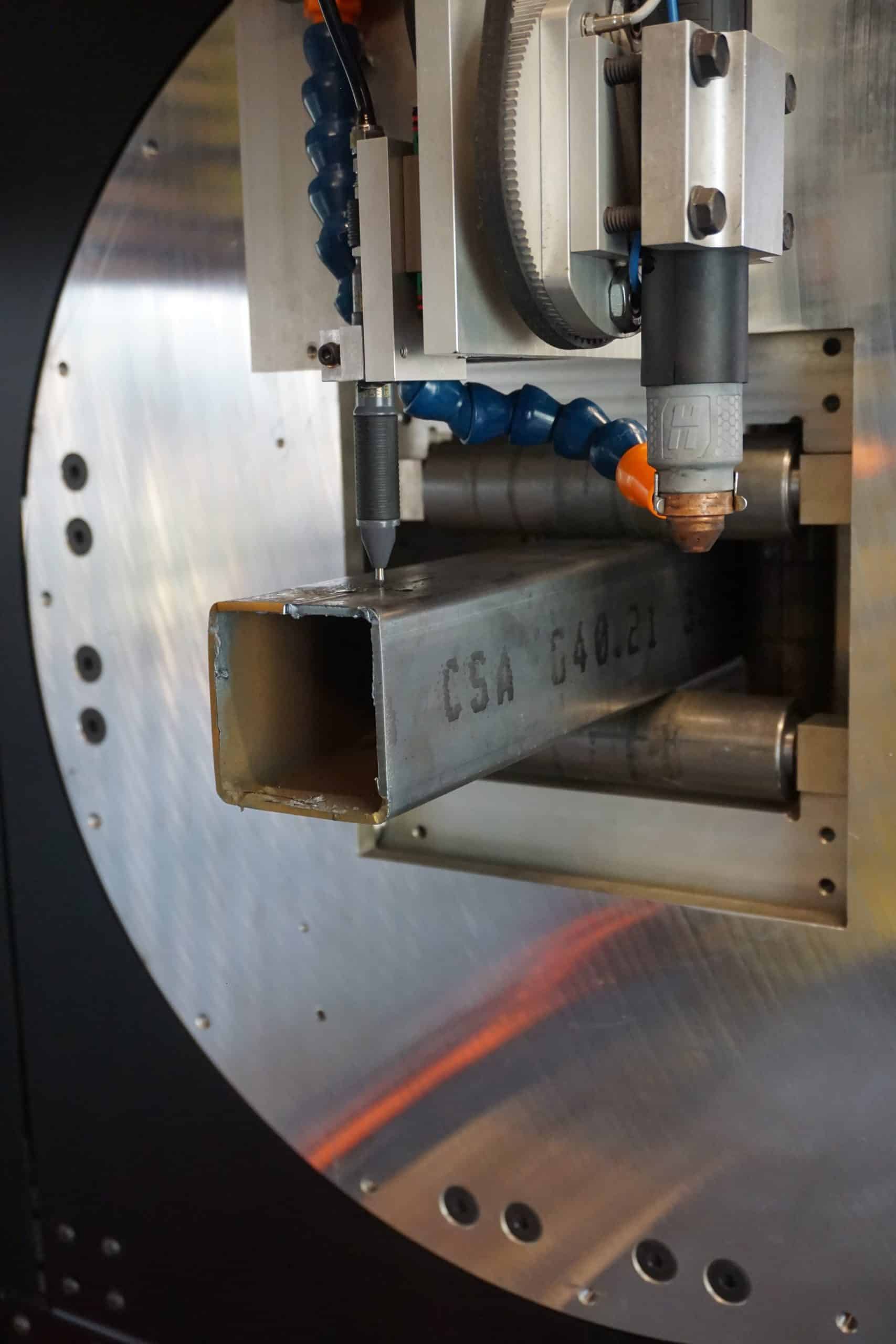
Handrail work lives and dies on fit-up. Every post, every return, every wall bracket has to land tight before a welder can even strike an arc. The PD-10 takes the layout, coping and beveling off your bench and puts it on a CNC that repeats the same cut a hundred times in a row.
The Problem
What handrail shops are fighting today
- Copes cut freehand on a bandsaw, then ground to fit one joint at a time. That grinding time is pure labor with nothing to invoice against.
- Layout by tape and soapstone on every post. One misread mark on a stair rail and the whole run walks out of pitch.
- Rake angles for stairs cut twice — once wrong, once right — because the miter head only holds so much accuracy under a long stick of pipe.
- Your best fabricator spends the morning on a chop saw instead of on the rail set that is actually behind schedule.
- Weld gaps that got fudged into place come back as grind-and-fill work on the finish coat.
The Fix
How the PD-10 solves it
True copes, straight off the machine
Saddle cuts for post-to-rail and rail-to-rail joints are cut to the profile of the mating pipe, so the joint closes clean. Your welders stop fitting and start welding.
Rake and miter angles as data, not guesswork
Stair pitch goes into FlashCut once and every post on that flight gets the same angle. Repeat the flight next month and the program is still there.
Automated beveling for weld prep
Bevels are cut in the same operation as the profile. That is a whole grinding station you no longer staff on every rail job.
Engraving for part marking
Mark post numbers and flight IDs directly on the part so a rail set gets assembled in the right order without a bench full of tags.
Material
Material you actually run
- 1.5" and 1.9" round schedule 40 pipe for rail and posts
- 1" to 2" square tube for pickets, posts and ornamental infill
- Rectangular tube for top caps and structural stringers
- Angle and channel for stringer and mounting details
- Flat bar and plate up to 10" wide for base plates and brackets
Throughput & Labor
What This Actually Saves You
Shops that move coping and beveling to CNC typically pull the fitting labor out of the middle of the job and push more rail sets through the same bay — without adding a welder. We will not quote you a made-up multiplier; bring us a real rail package and we will walk the cut list with you on a demo.
FAQs
Questions From Shops Like Yours
Still Have Questions? Let's Talk.
Tell us what you're cutting and we'll put together a configuration and a real number — no runaround, no call center.